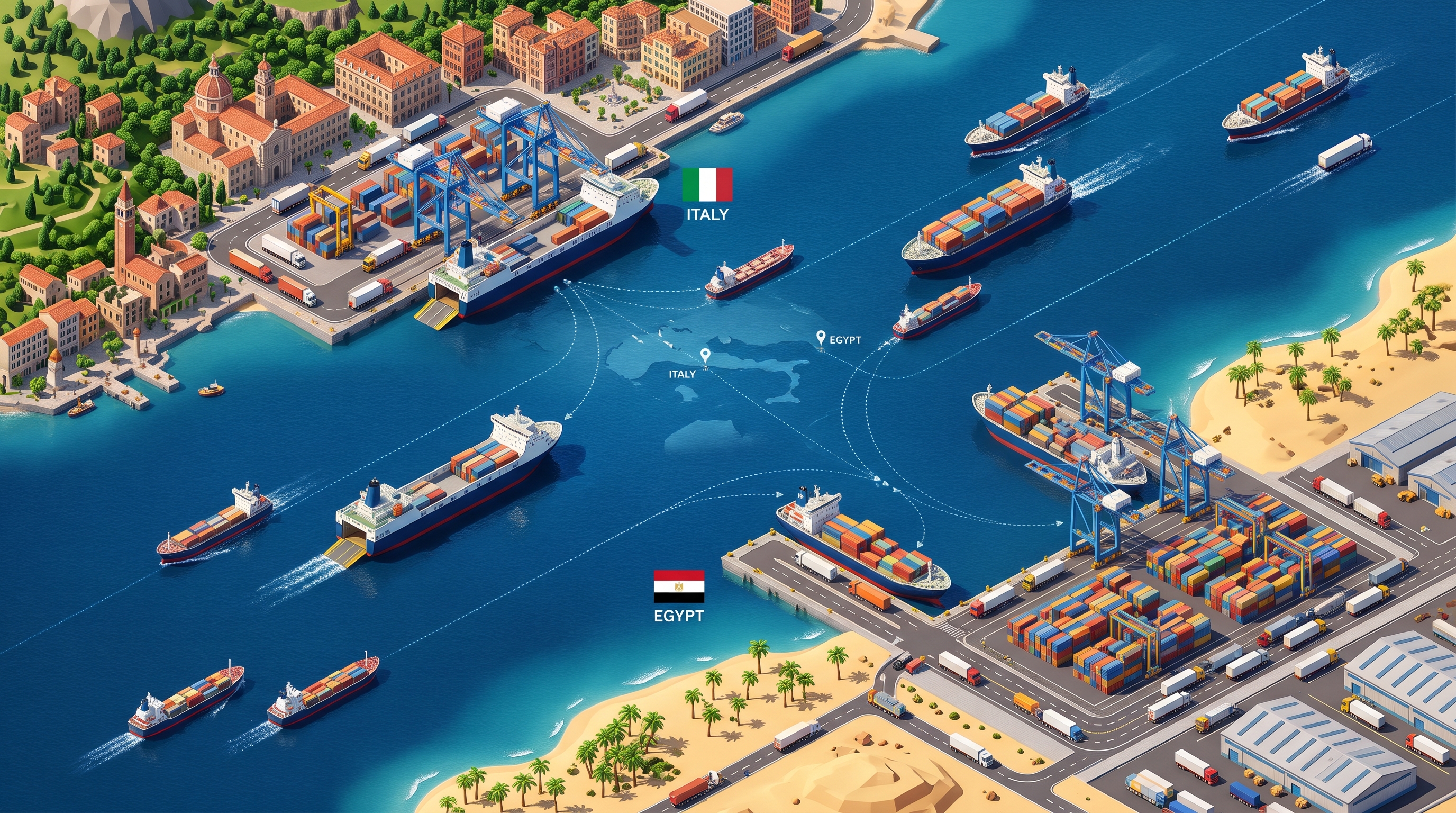
Bypassing Chokepoints: How the Egypt–Italy Cargo Route is Reshaping Mediterranean Trade


Ongoing disruptions along global shipping arteries—from Red Sea security volatility to container congestion across traditional sea lanes—have forced logistics operators to pivot from conventional maritime paths toward targeted, near-shore corridors.
Among the fastest-growing alternatives is the Egypt–Italy roll-on/roll-off (RoRo) cargo route, linking Egypt's Port of Damietta directly with Italy's Port of Trieste. What started as a bilateral trade initiative is quickly maturing into a critical arterial bypass for European and North African supply chains.
Why the Egypt–Italy Corridor is Gaining Rapid Momentum
- Slashing Ocean Transit Times:
Traditional container transshipment loops through the Mediterranean can take up to a week or more with multi-port calls. A dedicated RoRo service cuts pure sea transit to roughly 2.5 to 3 days, enabling trucks and temperature-controlled trailers to disembark and hit European highways immediately. - Securing Just-in-Time Perishable Goods:
Egypt represents a primary supplier of fresh produce, fruits, and vegetables to European markets. Shorter transit windows dramatically reduce spoilage risks, lower reliance on expensive air freight, and extend supermarket shelf life across Southern and Central Europe. - Seamless Hinterland Road-Rail Integration:
Terminating in Trieste provides immediate access to Central and Eastern European rail networks (intermodal freight trains into Germany, Austria, and Switzerland), bypassing congested Western Mediterranean maritime gateways.
Strategic Advantages for Logistics Operators
- Trailer-Ready Speed (Roll-On/Roll-Off):
Because trailers and tractors roll directly onto and off the vessel, operators avoid the container yard handling bottlenecks and crane delays common in heavily congested hubs. - Green Multimodal Routing:
Combining direct sea transit with electrified European rail corridors substantially reduces total carbon emissions compared to long-haul road trucking across multiple borders. - Customs Fast-Tracking:
Bilateral digitalization efforts and pre-clearance green customs corridors between Egyptian and Italian authorities prevent administrative stagnation at maritime entry points.
Industry Takeaway
The surge in traffic along the Egypt–Italy maritime corridor illustrates a broader structural shift in global trade: resilience over single-route dependence. As geopolitical risks and bottleneck vulnerabilities persist along conventional long-haul channels, regionalized short-sea corridors and RoRo connections are proving to be indispensable assets for agile supply chain management.