
Redefining Maritime Supremacy: How China Captured Nearly 82% of Global Shipbuilding Orders


Global commercial shipping is undergoing a profound industrial realignment, with Chinese shipbuilders capturing an extraordinary share—approaching 82% of total new global vessel orders.
Historically split among maritime manufacturing powerhouses like South Korea and Japan, the global orderbook has tipped decisively in China’s favor. This shift is not merely a tale of low-cost manufacturing; it marks an evolution toward technological sophistication, supply chain clustering, and rapid shipyard adaptability.
Key Drivers Behind the Market Surge
- Mastery of High-Value, Green-Fuel Vessel Tech:
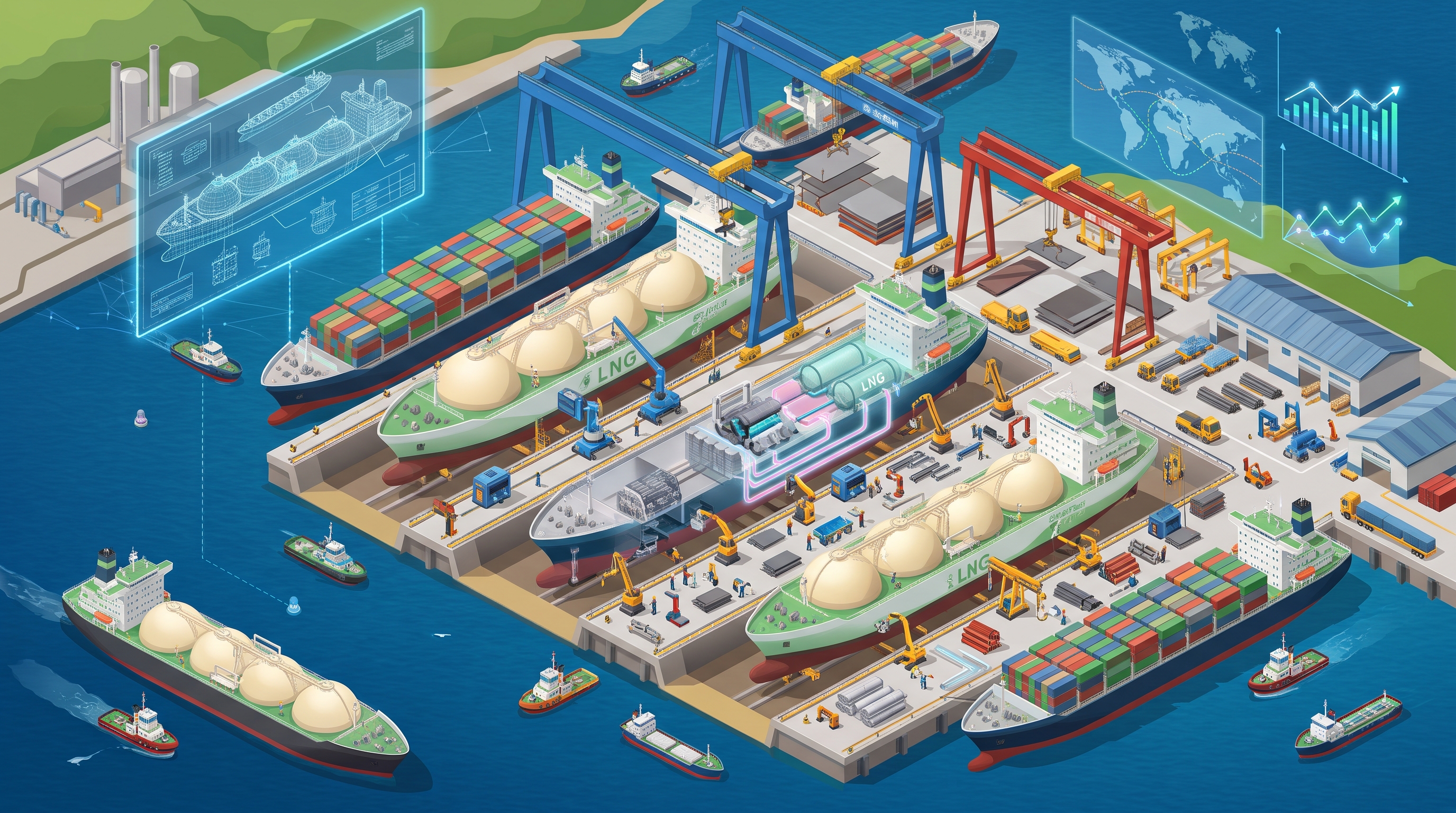
Chinese yards are no longer restricted to standard bulk carriers or basic dry cargo barges. They now capture major order shares for sophisticated dual-fuel LNG, methanol-powered ultra-large container ships, and cryogenic liquefied gas carriers—sectors previously dominated by South Korean specialists. - Unmatched Industrial Supply Chain Integration:
Unlike international competitors who must import high-strength marine steel plates, auxiliary generators, or automation electronics across border lines, Chinese shipbuilders source up to 90% of raw inputs and mechanical components domestically. This tight clustering insulates yards from foreign supply shocks and compresses construction timelines. - Dry Dock Capacity and Delivery Speed:
Global liner carriers ordering dozens of multi-thousand-TEU vessels simultaneously face multi-year delivery queues in traditional yards. Chinese shipbuilders, backed by expansive deep-water dry docks and automated gantry infrastructure, offer delivery slots that competitors simply cannot match.
Strategic Implications for Global Logistics & Shippers
- Standardization of Green Fleets:
As international ocean carriers race to meet International Maritime Organization (IMO) carbon emissions mandates, Chinese shipbuilders have become the standard supplier for next-generation, alternative-fuel transport assets. - Carrier Fleet Planning:
Major container shipping alliances (such as MSC, Maersk, and CMA CGM) are anchoring their 10-year fleet renewal roadmaps directly around Chinese delivery berths, making the country the primary architect of future global cargo capacity. - Geopolitical & Trade Scrutiny:
Concentration of over four-fifths of worldwide merchant vessel production within one jurisdiction is elevating maritime resilience concerns among Western policymakers and trade regulators, prompting discussions around shipbuilding subsidies and domestic fleet revivals.
Industry Takeaway
Securing over 80% of new global ship orders underscores a permanent transition in maritime manufacturing. Through heavy investment in green propulsion, localized supply chains, and dockyard automation, China has positioned itself as the indispensable foundation upon which global trade's commercial fleet will operate for decades to come.