
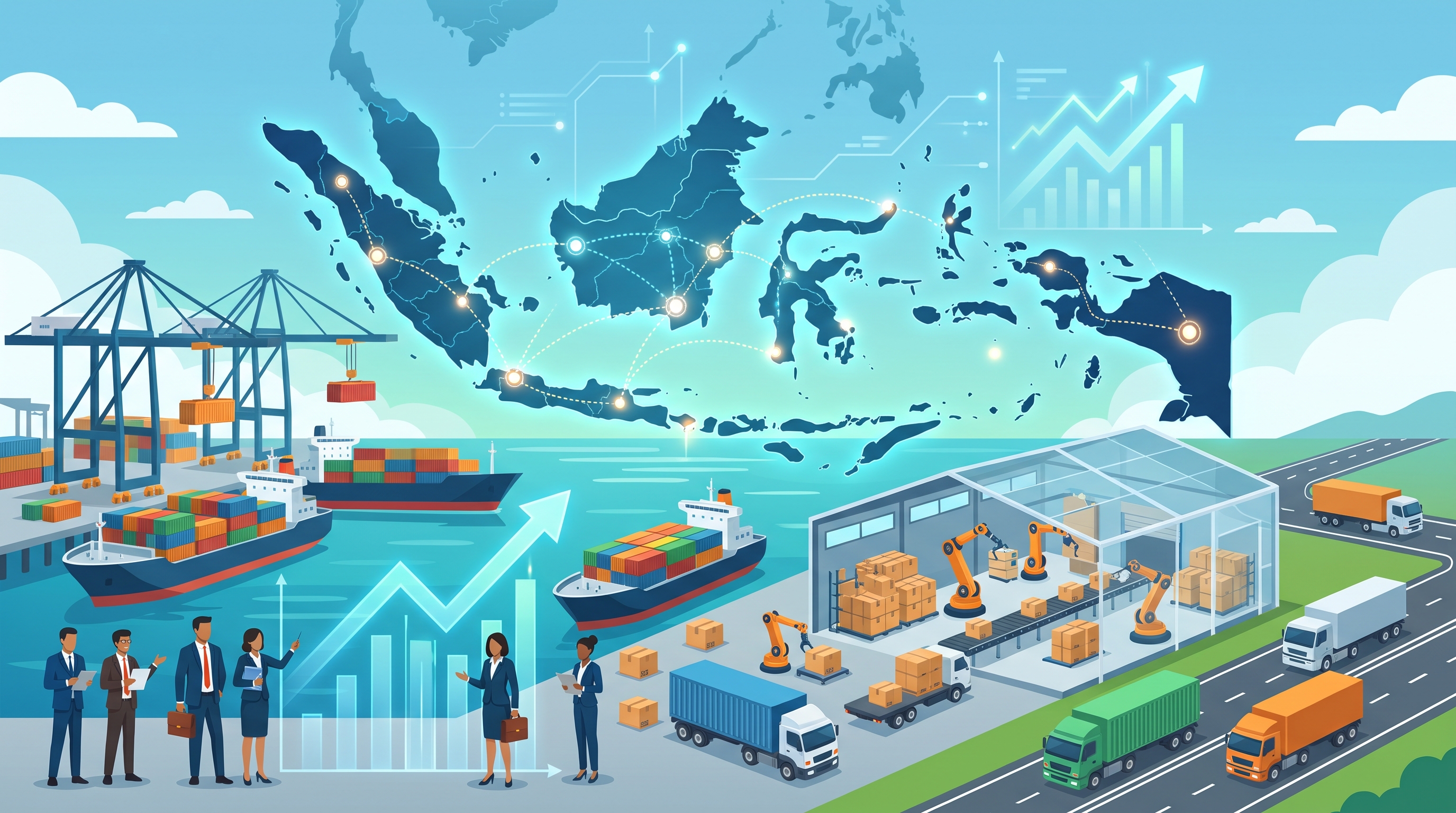
Lowering Logistics Costs: The Critical Lever to Accelerate Indonesia’s Economy Toward 7.5% Growth


Achieving an ambitious national GDP growth target of 7.5% hinges directly on a fundamental economic variable: the cost of moving goods across the Indonesian archipelago.
Government policymakers and economic strategists have highlighted that slashing logistics overhead—historically among the highest in ASEAN as a percentage of GDP—is not merely an operational goal, but the single most impactful structural catalyst required to fuel industrial acceleration, trade competitiveness, and investment inflows.
Why Logistics Efficiency Dictates GDP Acceleration
The correlation between freight cost reduction and macroeconomic expansion operates through several direct economic mechanisms:
- Widening Corporate and Industrial Margins:
High transport and distribution costs directly compress operating margins for domestic manufacturers. Cutting logistics burdens allows enterprises to redirect capital toward production expansion, technological upgrades, and workforce development. - Price Competitiveness for Export Commodities:
Whether handling processed mineral goods, agricultural commodities, or manufactured textiles, lowering the cost per container from production hinterlands to export terminals immediately sharpens Indonesia's price competitiveness against regional export rivals. - Inter-Island Price Stabilization:
Disparities in consumer product prices between Java and outer island regions stem largely from domestic maritime logistics friction. Efficient, integrated shipping routes lower living costs and boost consumer purchasing power across Eastern and Central Indonesia.
Strategic Focus Areas to Slash Logistics Costs
To bring logistics expenses down to competitive levels—targeting near 8%–10% of GDP—reform efforts are prioritizing three foundational transformations:
- Expanding the National Logistics Ecosystem (NLE):
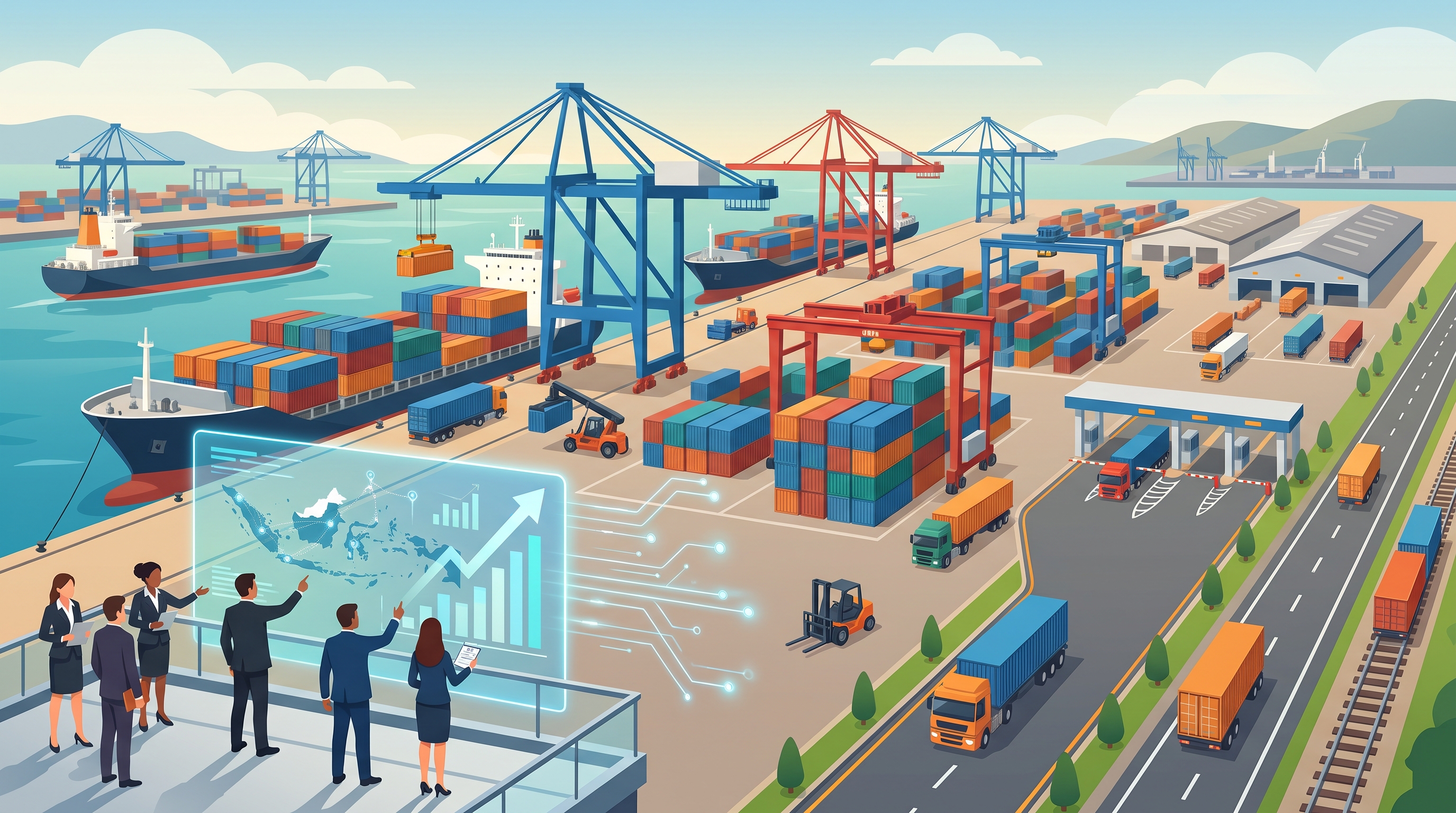
Connecting government regulatory agencies, customs databases, terminal operators, and commercial haulers onto a synchronized digital platform eliminates repetitive physical inspections and reduces port dwelling times. - Intermodal Port-to-Hinterland Corridors:
Developing dedicated freight rail lines and direct toll corridors linking major manufacturing estates in West Java and Central Java directly to deep-sea container terminals eliminates bottlenecks on arterial roads. - Elimination of Multi-Layered Administrative Friction:
Streamlining non-tariff barrier inspections and automating permit issuances across provincial transit borders to prevent artificial transit delays and redundant transit fees.
Industry Takeaway
A national growth target of 7.5% requires more than fiscal stimulus; it demands an agile, lean, and cost-effective physical supply chain. As infrastructure integration and digital port automation gain traction, companies operating across the freight, 3PL, and warehousing sectors are positioned at the very frontlines of turning Indonesia's high-growth potential into reality.